
The Great Gatsby, written by F. Scott Fitzgerald in 1925, is a quintessential American novel exploring wealth, ambition, love, and the elusive American Dream. Set in the Roaring Twenties, it offers rich opportunities to study symbolism, characterization, narrative perspective, and themes of social class and moral decay. Fitzgerald’s lyrical prose also allows analysis of imagery, motifs, and irony. Suitable for Grades 11–12, this novel encourages students to critically examine literary devices, societal context, and human behavior, making it ideal for advanced high school English and literature curricula.

Literature Guide Content Outline
| Title | The Great Gatsby |
| Author | F. Scott Fitzgerald |
| Year Published | 1925 |
| Suitable Grade Level | Grades 11–12 |
| Eight Lessons: Chapter Breakdown | Lesson 1: Chapter 1 Lesson 2: Chapter 2 Lesson 3: Chapter 3 Lesson 4: Chapter 4 Lesson 5: Chapters 5, 6 Lesson 6: Chapter 7 Lesson 7: Chapter 8 Lesson 8: Chapter 9 |
| Key Themes | – The American Dream: Its corruption. – Wealth, class, and social status: Disparities and social mobility. – Love, obsession, and desire: Romantic idealism and longing. – Identity and self-invention: Creating one’s persona. – Moral decay and disillusionment: Societal and personal corruption. – Illusion vs. reality: Dreams versus truth. |
| Literary Elements | – Symbolism: The green light, Valley of Ashes. – Foreshadowing: Hints at Gatsby’s fate. – Irony: Gatsby’s dream versus reality. – Characterization: Complex portrayals of Gatsby, Daisy, and others. – Setting: Roaring Twenties, East Egg and West Egg. – Narrative perspective: First-person, Nick Carraway. |
| Rhetorical Devices | Imagery: Vivid descriptions of parties and settings. – Metaphor: The eyes of Dr. T. J. Eckleburg – Simile: Comparisons of characters and emotions. – Allusion: References to historical and literary figures. – Repetition: Emphasizes key ideas, e.g., “old sport.” |
| Curriculum Connections | – American literature: Jazz Age, Roaring Twenties context. – Themes of social critique: class, morality, and the American Dream. – Comparative literature: contrast with other American Dream narratives. – Writing analysis: essay topics on symbolism, theme, and character development. – Historical context: post-WWI America, Prohibition, economic disparity. |
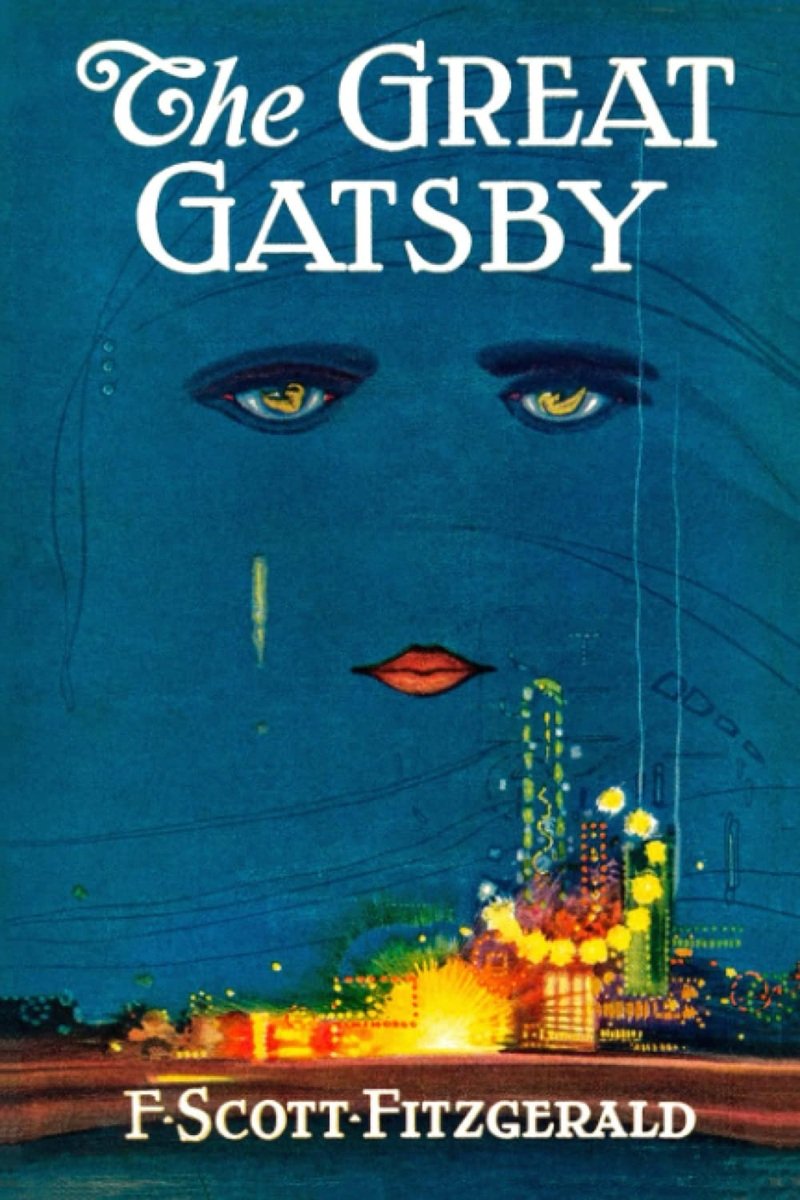
The Great Gatsby
The Great Gatsby by F. Scott Fitzgerald explores love, ambition, and the American Dream through Jay Gatsby’s lavish life and longing. A timeless classic. Available now on Amazon.
This is an affiliate link; we may earn a small commission at no additional cost to you.
The Great Gatsby Free Chapter Summary Download
Example: Chapter 1 (Summary – 200 words)
The novel begins with narrator Nick Carraway reflecting on advice from his father about reserving judgment about others. Nick moves from the Midwest to New York in 1922 to work in the bond business. He rents a modest house in West Egg, a wealthy area on Long Island known for its newly rich residents. His next-door neighbor is the mysterious millionaire Jay Gatsby, who lives in an enormous mansion.
Nick visits his cousin Daisy Buchanan and her husband Tom Buchanan at their luxurious home in East Egg, where wealthy families with “old money” live. During dinner, Nick meets Jordan Baker, a professional golfer and friend of Daisy. The conversation reveals tension in Daisy and Tom’s marriage, and Jordan quietly tells Nick that Tom is having an affair.
Later that night, Nick returns home and notices Gatsby standing alone outside his mansion. Gatsby reaches his arms toward a distant green light across the water, which Nick later learns is at the end of Daisy’s dock. This mysterious moment introduces Gatsby as a hopeful and romantic figure while also establishing the novel’s themes of longing, wealth, and illusion.
Free Download: The Great Gatsby Summaries Chapters 1-9
Download the chapter summaries for each chapter in The Great Gatsby. These summaries provide useful background information for both students and teachers. Download them now for free:
The Great Gatsby Multiple-Choice Questions
These multiple-choice questions for The Great Gatsby by F. Scott Fitzgerald are designed for Grade 11–12 students studying the novel in high school literature courses. Each chapter includes twelve carefully developed questions that assess a range of reading and analytical skills. The questions are not limited to simple recall. Instead, they encourage students to think critically about the text and examine deeper literary elements. Students will encounter questions about plot details, character motivations, key quotations, symbolism, and major themes such as the American Dream, social class, illusion versus reality, and the consequences of ambition.
The answer choices are intentionally varied and often draw on real events, characters, and details from the novel. This design encourages students to return to the text to confirm their understanding rather than relying on guesswork. The questions also vary in style, including comprehension, interpretation, and analytical thinking. As a result, these quizzes can be used for chapter reviews, reading checks, assessments, or preparation for larger unit tests.
The Great Gatsby Chapter 1 (docx)
Free download of the first chapter: Multiple-choice questions for The Great Gatsby
Chapters 1-9 (docx)
Download chapters 1-9: Multiple-choice questions for The Great Gatsby